
2026 Research Fellows
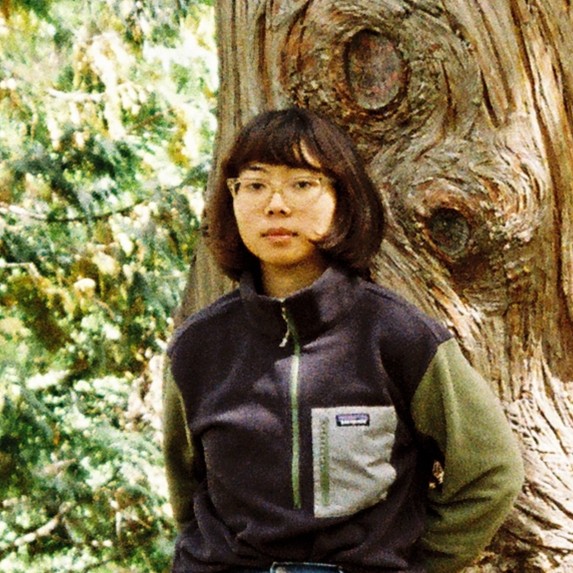
Rara Sekar Larasati is an Indonesian musician, sound artist, researcher, curator, and community educator working across sound, visual culture, and socially engaged practice. Performing as hara, her music combines folk, Indonesian traditional music, ambient composition, and field recording to explore ecology, climate crisis, ritual, grief, and collective care.
Grounded in cultural anthropology, her practice spans documentary photography, ethnographic research, sound installation, and curatorial work. She is co-founder of Arkademy Project, a photography collective focused on critical visual storytelling and social issues. She holds a Master’s degree in Cultural Anthropology from Victoria University of Wellington, where her research explores how rural youth in Java understand success as relational and shaped by adat, social capital, reciprocity, and collective belonging.
Her recent and upcoming exhibitions/performances span Aotearoa New Zealand and Indonesia, including Indonesia in Focus (curator and public programmer, Photo Book New Zealand Festival, Massey University, Wellington, 2026 – forthcoming), The Wind (composer and performer, live cinema, Wellington Film Society, 2026 – forthcoming), Tidur Siang di Pangkuan Ibu (sound artist, Ibu Arsitek: UMA, Museum MACAN, Jakarta, 2025), Rimu-rimu (sound artist, Seeing Through a Murky Gaze, play_station gallery, Wellington, 2025), and Belantara (sound artist, Indonesian Contemporary Art and Design / ICAD 13, Jakarta, 2023).
Her recent projects include Kabut Putih (White Fog), an archival and participatory work engaging with histories of the 1965 genocide and political imprisonment in Indonesia, and Rakyat Bersatu, Pasti Menang, a commissioned protest chant for the global climate initiative SingTheWay.

Ferdy Karel Soukota is an Indonesian musician, researcher, and cultural practitioner from Maluku whose work moves between artistic creation and critical inquiry. His practice is grounded in a deep engagement with local sonic traditions, particularly kapata as a form of oral knowledge, while also drawing on contemporary theoretical frameworks, such as hauntology, sound studies, and decolonial thought. Through this approach, he examines how sound functions not only as an aesthetic expression but also as a medium of memory, history, and cultural transmission.
In addition to his work as a musician, Kotta is involved in artistic research that seeks to reposition Malukan musical practices within broader academic and cultural discourses. He is also part of Parrhesiastes, an initiative situated at the intersection of the humanities and social practice, engaging critical inquiry alongside community-based work. As a member of Fis Duo, he collaborates in a musical project that brings together traditional sound practices, critical discourse, and elements of popular music into a shared artistic language.
One of his most notable works is a musical representation of the kapata Hena Masa Waya, developed as part of his master’s thesis at the Institute of the Arts Indonesia in Yogyakarta. Separate from this, he also created a new work through processes of reconstruction and reinterpretation, approaching the kapata as a melodic form, including a compositional process developed in Rim, Kilang Village. In this context, the work is not treated as a rigid or fixed tradition, but as a living sonic form that carries layers of history, fragmented memories, and evolving meanings shaped by contemporary listening practices.
His work often reflects on the tensions between tradition and popular culture, analogue and digital recording practices, and the shifting conditions of musical life in regions with limited infrastructure. In his various projects, he consistently explores questions surrounding presence, absence, power, and the spectral qualities of sound in shaping contemporary cultural experiences.